
BUILDING
AN “ECO” TRAIL
This page is under construction
1. Harvest Red Pines
IMPACT launched its most significant project yet in April 2025: building an accessible "eco" trail designed for beginners and those needing easier access, aiming to connect visitors with the restorative and energizing benefits of spending time in the forest.
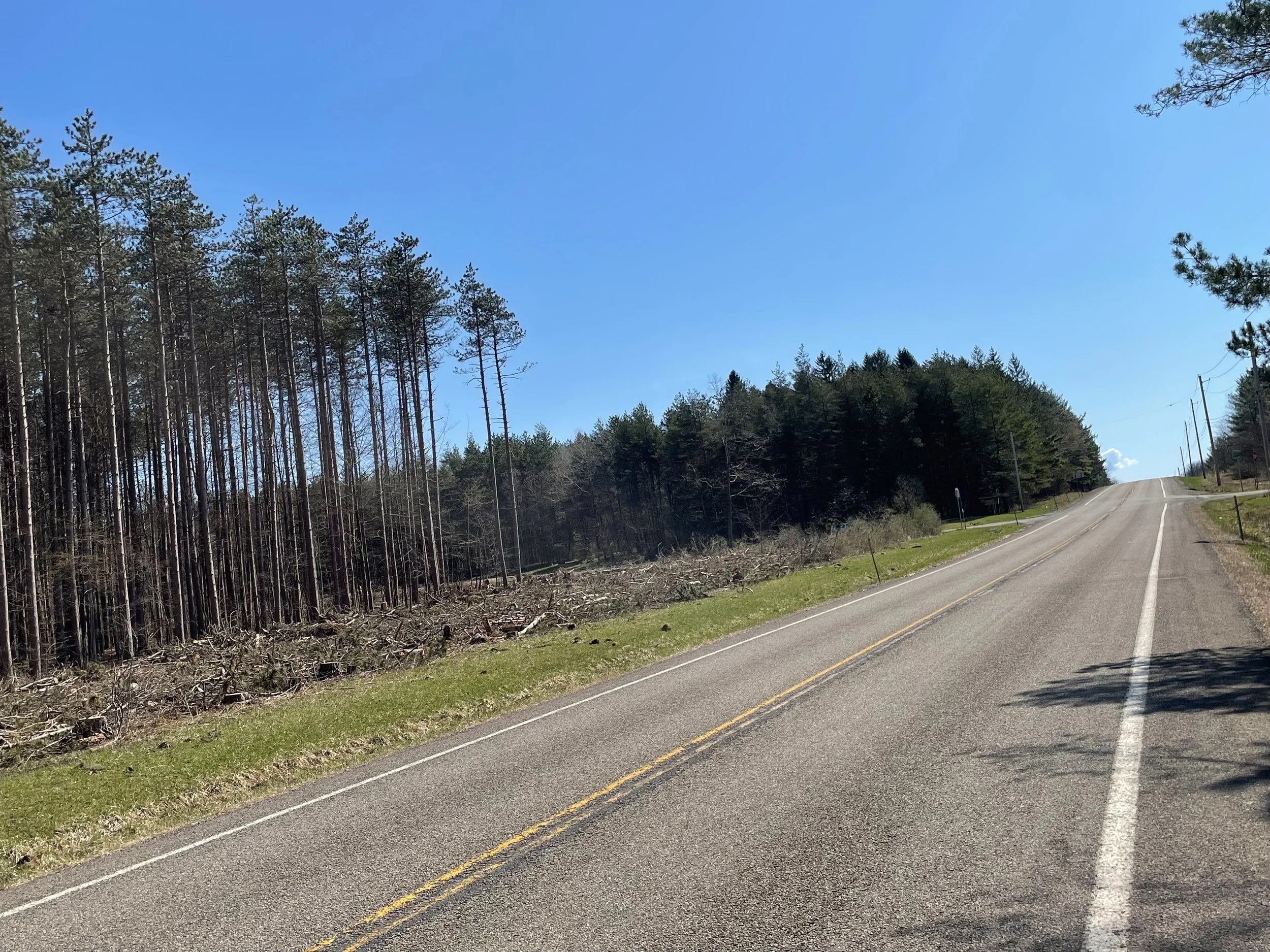
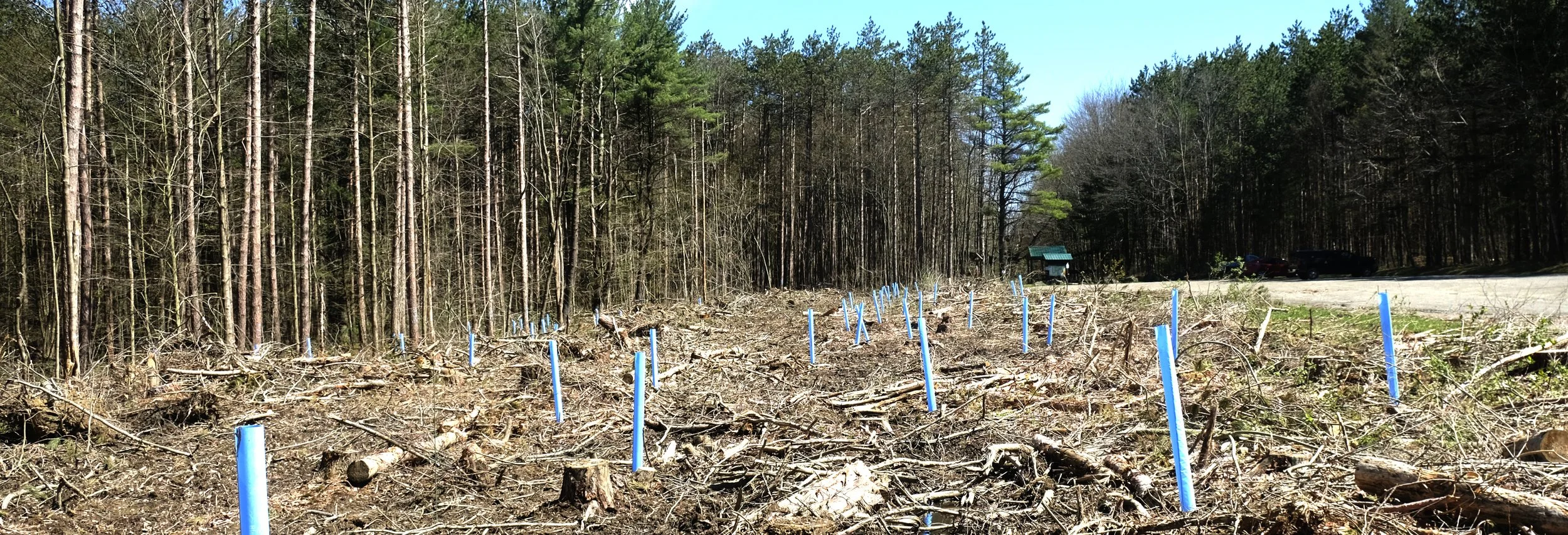
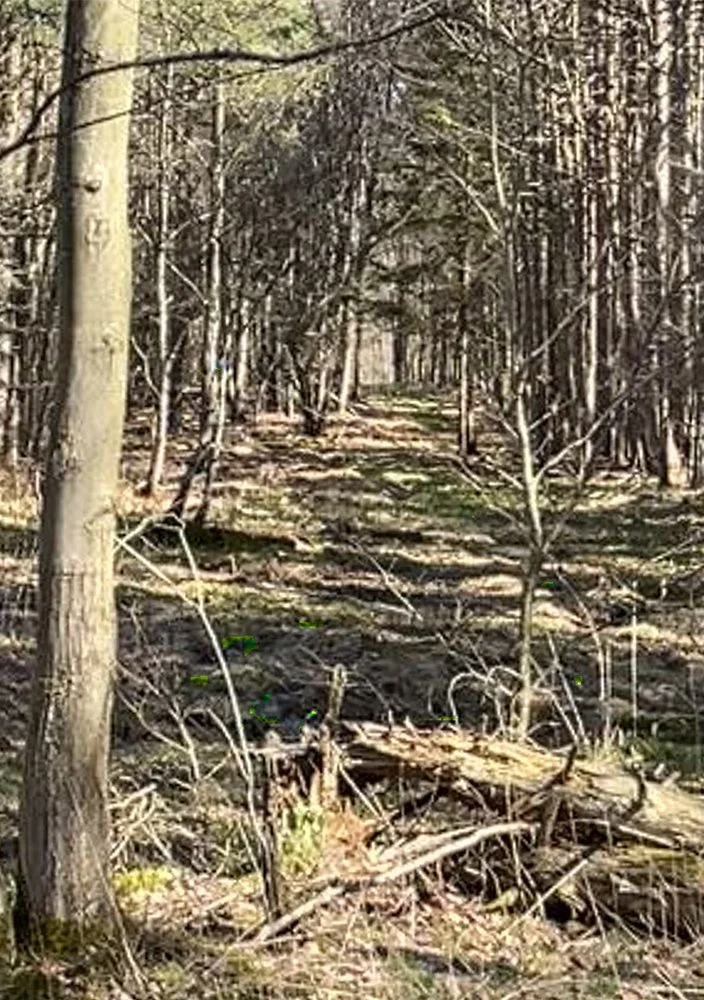
Located on the southwest corner of the Phillips Creek Forest entrance, the new trail will be approximately one mile in length, weaving its way through existing forests and through an area where local DEC Foresters have recently harvested red pines for sale.
Through IMPACT’s Volunteer Service Agreement with the DEC, the trail site was chosen collaboratively, to serve both the DEC’s timber-harvest objectives and IMPACT’s trail-construction goals.
Photos posted here illustrate the phases of trail-building.
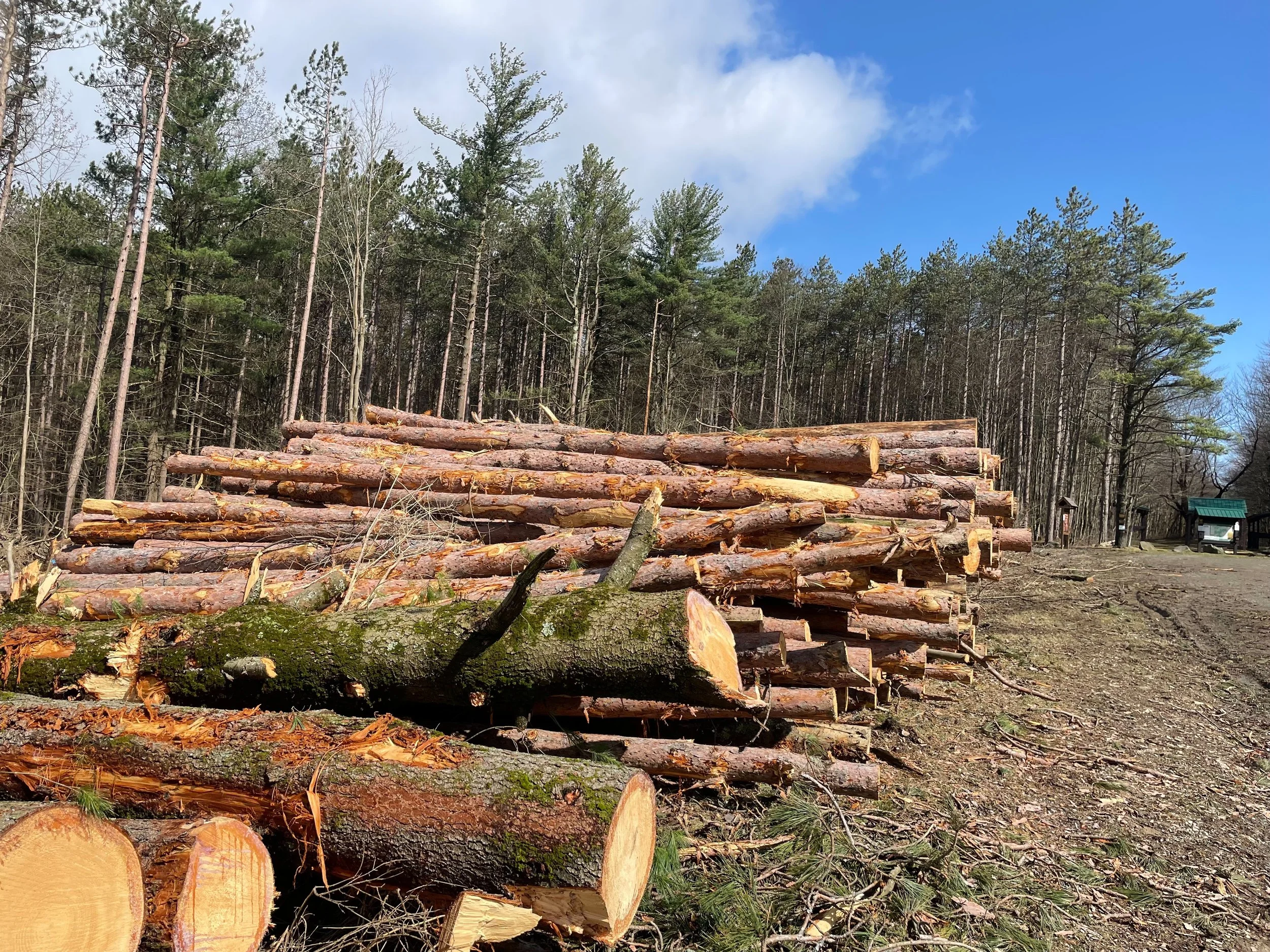
Red pines harvested to make way for the Beginners Trail were planted in the 1930s by the Civil Conservation Corps to prevent soil erosion on abandoned farm fields.
2. Plant Saplings
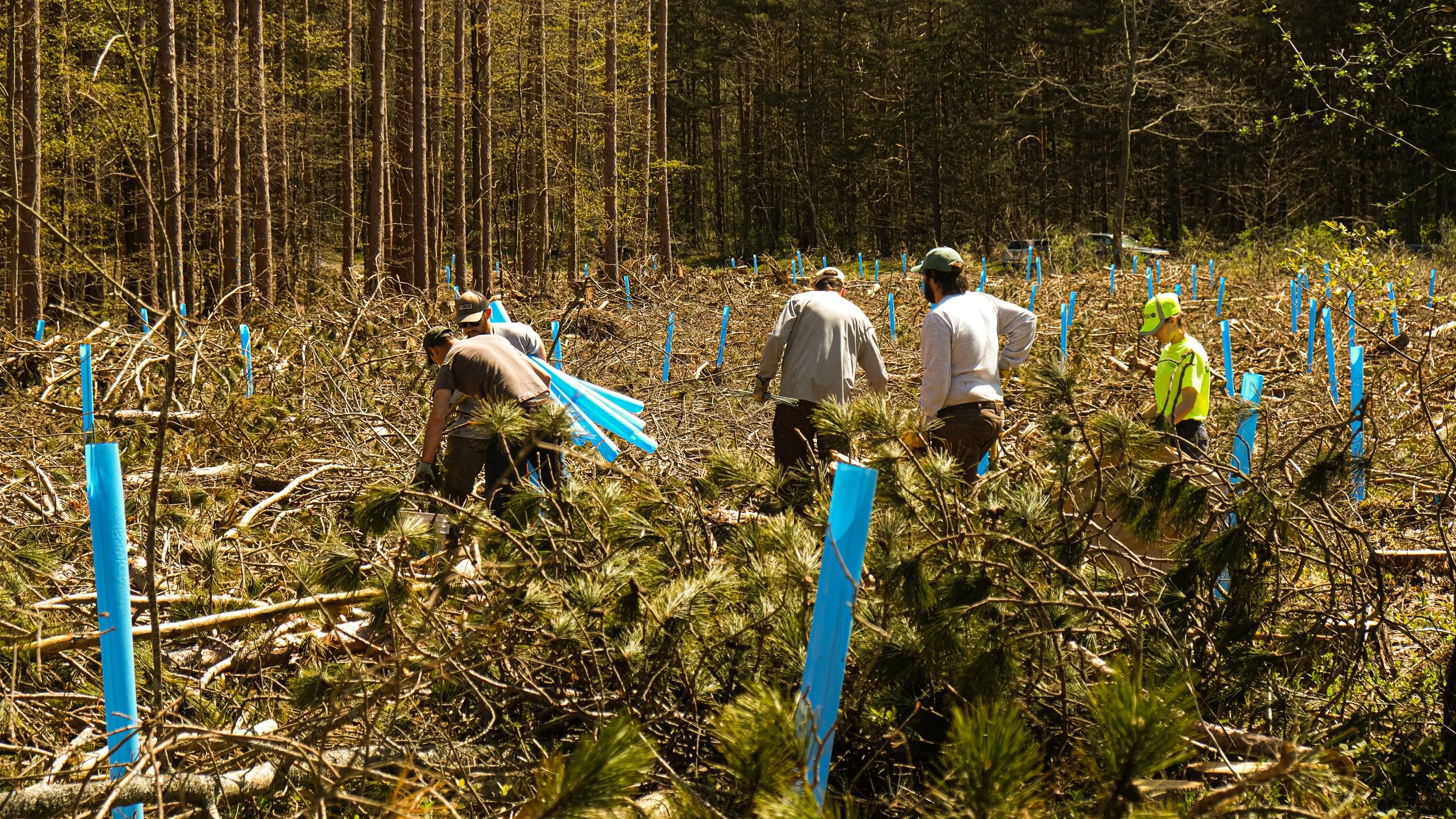
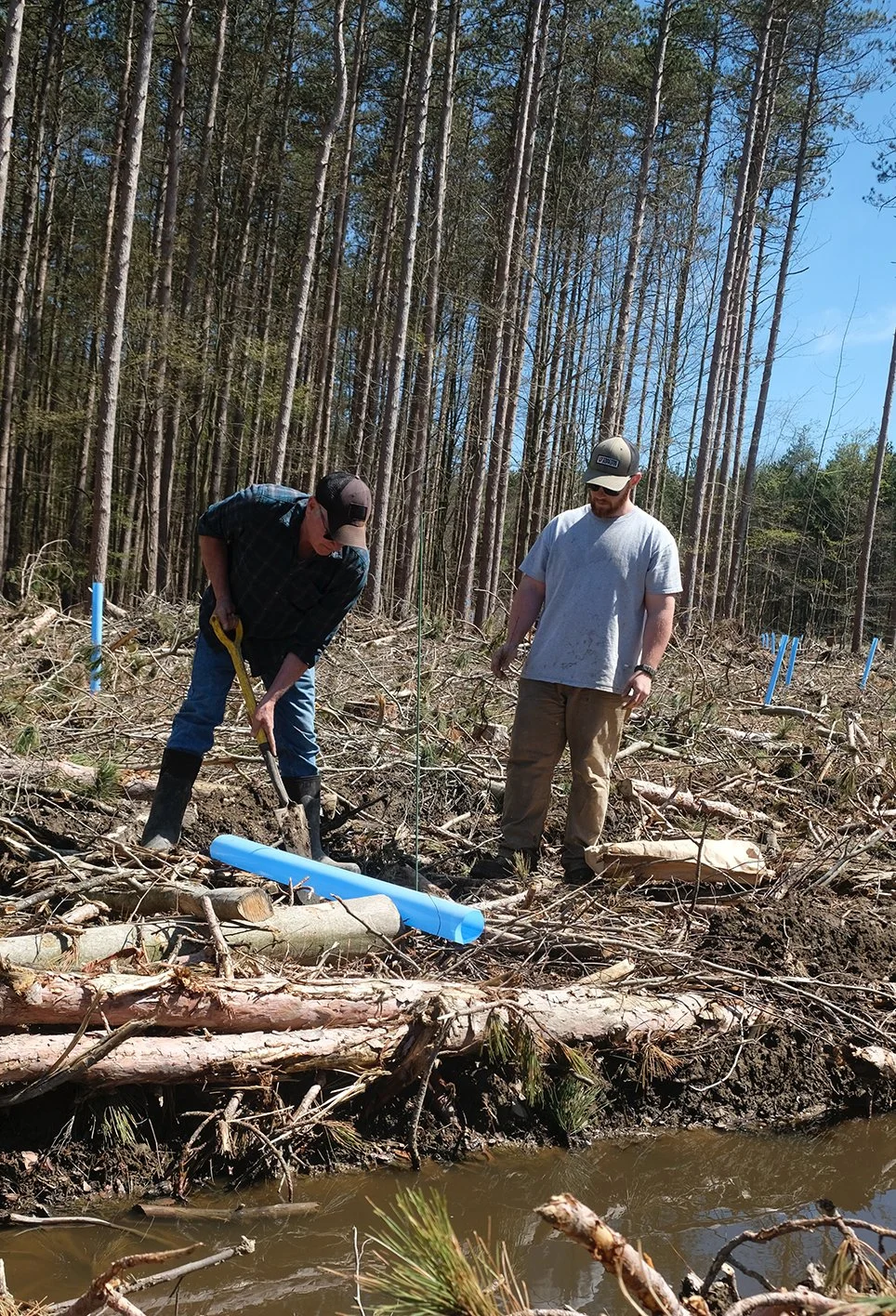
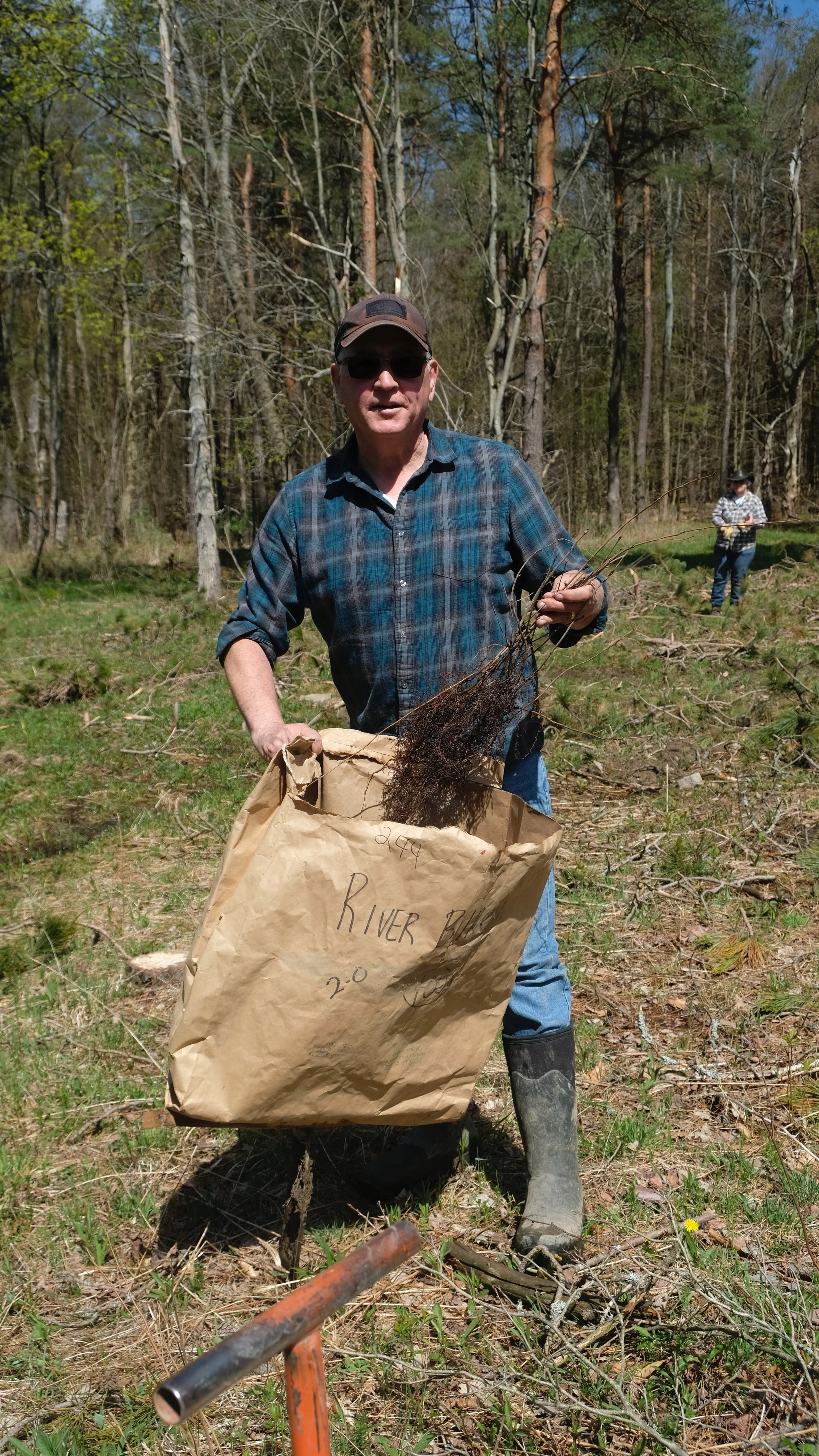
In the area cleared by the loggers, IMPACT volunteers, New York State Foresters (DEC), and two specialists in forestry from Western New York planted 125 seedlings on April 30, 2025.
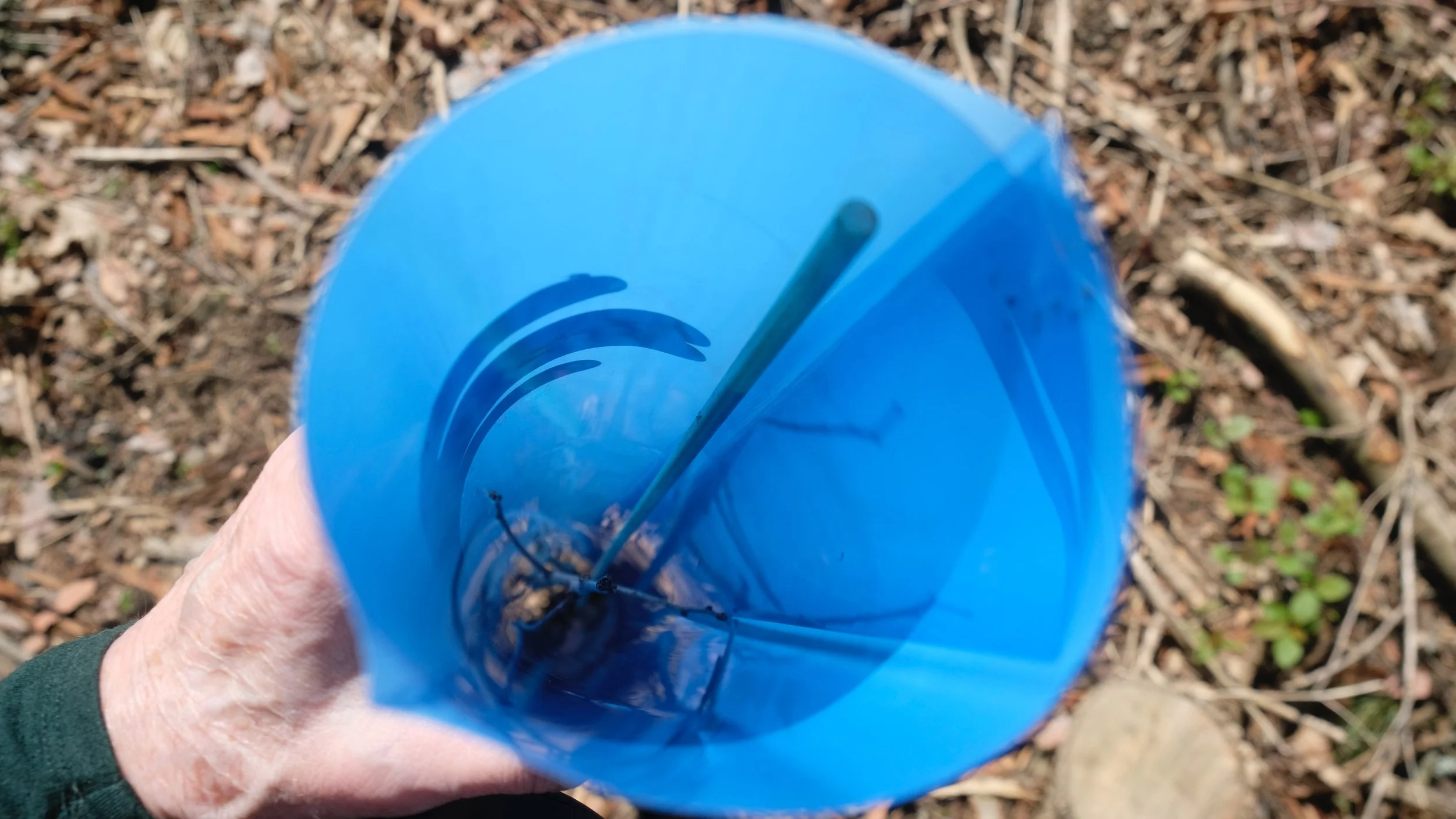
The seedlings planted in this section of the new trail include various native tree and shrub species (such as River Birch) that will provide a more biodiverse habitat for plants and animals. The seedlings are protected from deer browse by bright blue tree tubes.
Employees of the NYS Department of Environmental Conservation managed the planting of seedlings on the recently timbered section of Phillips Creek State Forest.
From left to right: Greg Mueller, Supervising Forester, NYS Department of Environmental Conservation; Tristan Fugle and Nathan Tucker, NYSDEC Foresters
3. Trail Repair & Construction
The most demanding and expensive stage of work involves repairing existing trails and linking them to the newly harvested and replanted areas of the trail.
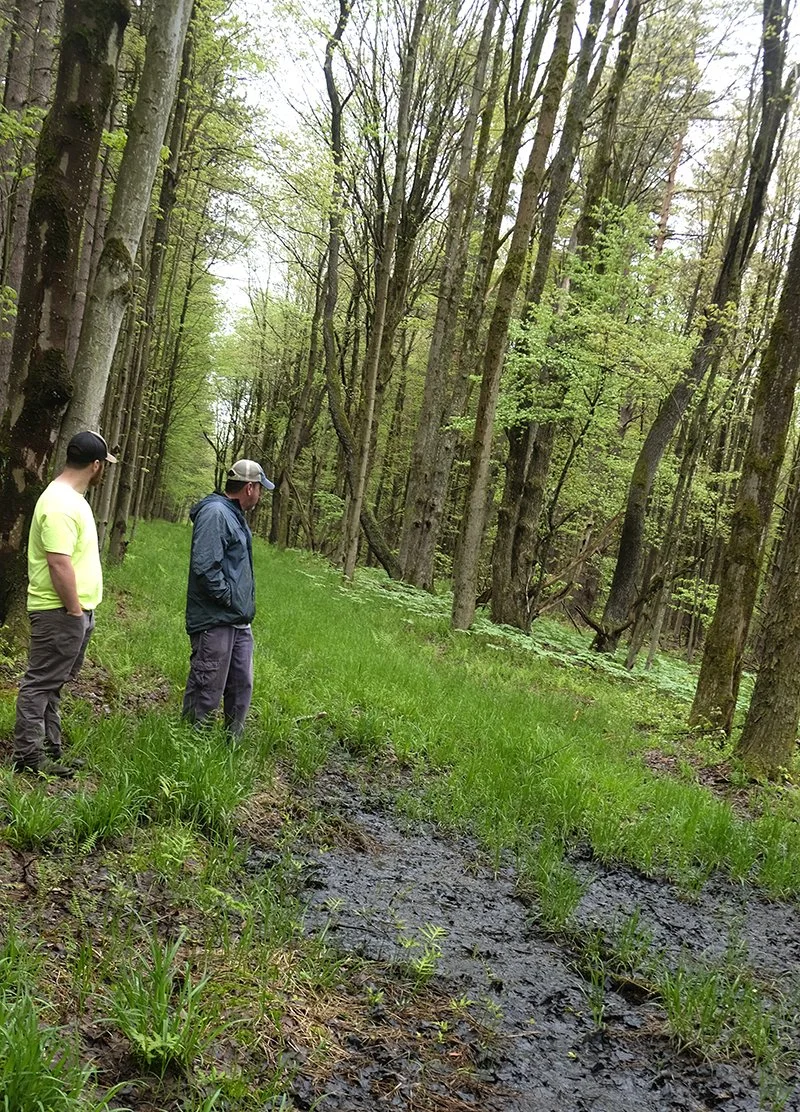
Preliminary grading of the “backside” of the new trail has been done, ensuring water runoff during the upcoming winter season.
To complete these sections and to build the trail through the area newly planted with seedlings involves installing geotextile fabric, topping the fabric with 6-8 inches of 3-4 inch stone, 6 inches of gravel, compacting, and laying down a final top coating of stone dust to harden the surface.
Phase 4: Design and Access
Planning by a Registered Landscape Architect, adhering to accessibility guidelines and best practices for new trail construction. Ongoing in 2026.
Install benches, build activity areas, create “sensory-experience” sites for people, and build other features for use by beginners and people of all abilities.
The project aims to promote healthy lifestyles, wellness and fun by educating visitors about the health benefits of time spent in nature.
Those benefits include lowering stress levels; improving concentration, memory and cognition; lowering blood pressure and the risk of stroke; boosting energy levels; creating a stronger immune system; and reducing the symptoms of anxiety and depression.
Each sign along the trail will inspire guests to use their senses to form deeper connections with nature, underscoring the scientifically proven health benefits of doing so.